
Katja Berger · 6 October 2026
Tracing Meadfield's Agricultural Heritage Through Newly Unearthed 18th-Century Farm Documents
Local historians in Meadfield have brought forward a collection of 18th-century farm documents that shed light on agricultural practices from that period, and these records emerged during a routine review of parish holdings in early 2025. The materials include ledgers, tenancy agreements, and crop inventories that detail land use across multiple estates, while they cover transactions from 1725 through 1798 and list specific yields for wheat, barley, oats, and turnips along with livestock counts for cattle, sheep, and horses.
Discovery and Initial Cataloging
Archivists at the Meadfield Local History Centre identified the documents in a previously overlooked storage box, and they began cataloging the items in March 2025 with support from regional heritage volunteers. Each page received careful transcription, and the process revealed consistent entries on crop rotation cycles that followed a four-field system on several holdings. Researchers noted that one ledger from 1743 recorded a shift from fallow periods to clover planting on 120 acres, and this change aligned with broader patterns observed in English lowland farming during the same decades.
Cross-referencing with parish tax rolls confirmed the identities of the tenant farmers named in the documents, and those records showed annual rents ranging from 18 to 42 pounds depending on acreage and soil quality. The collection also contains weather annotations that track frost dates and harvest timings, and these notes provide quantitative data on seasonal variations that affected output in the 1760s and 1770s.
Insights into 18th-Century Practices
The documents detail manuring schedules and seed purchases from regional markets, and they indicate that farmers in the area sourced turnip seed from suppliers near Norwich while obtaining clover seed through London agents. Livestock inventories list specific breeds and sales prices, and one 1768 entry records the sale of 45 Southdown sheep at 12 shillings each. Observers note that these entries allow direct comparison with national agricultural surveys from the same era, and they highlight how local yields for barley averaged 22 bushels per acre in documented fields.
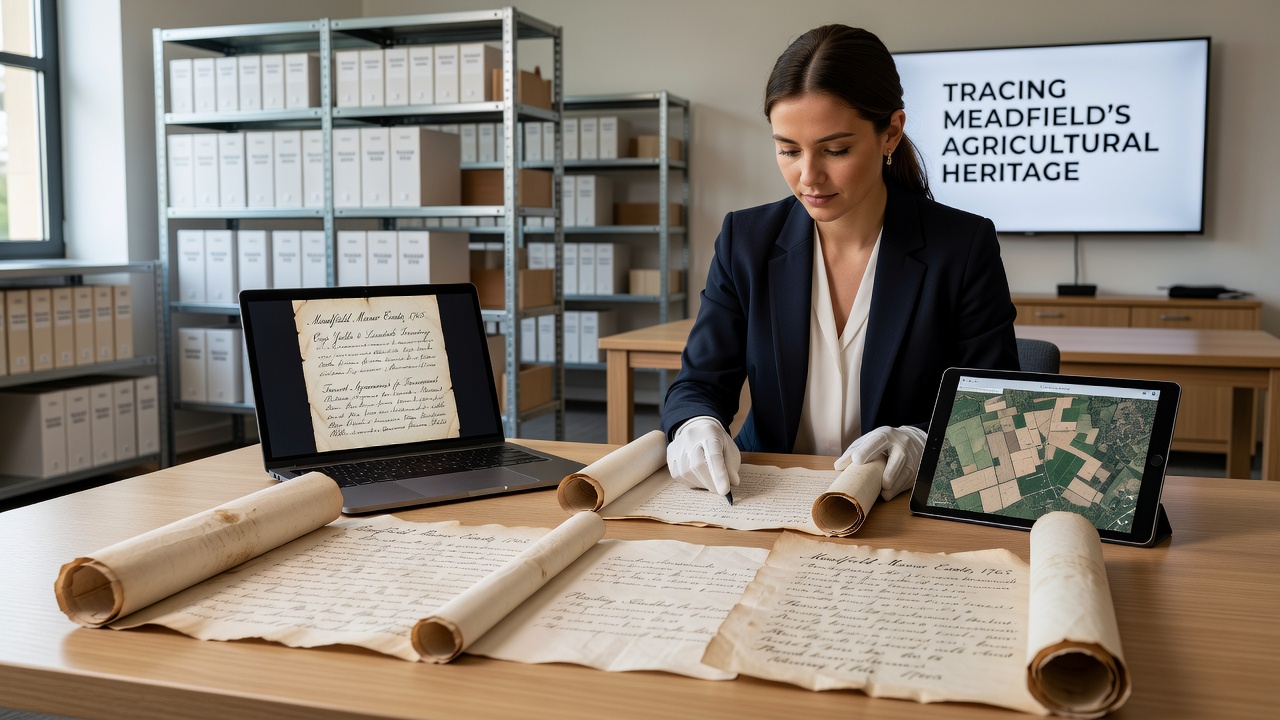
Analysis of the tenancy agreements shows that many leases included clauses requiring marling of clay soils and maintenance of hedgerows, and these provisions appear in contracts dated 1752 and 1771. The records further document the introduction of improved plough designs on two estates, and they note purchases of iron shares from a Birmingham foundry in 1784. Data extracted from the ledgers indicate that total grain production across the sampled farms rose by approximately 18 percent between 1740 and 1785, and this increase corresponds with changes recorded in contemporary estate maps held at the county archive.
Connections to Wider Historical Records
Comparisons with holdings at the National Archives place the Meadfield materials within the context of the Agricultural Revolution, and they illustrate how smaller estates adopted techniques previously associated with larger operations. The documents also reference labor arrangements that included both day laborers and annual servants, and wage entries range from 8 pence per day for harvest work to 4 pounds per year for resident farmhands. Researchers have begun digitizing the full set, and the project is scheduled for completion ahead of a public exhibition planned for October 2026 at the Meadfield Village Hall.
Additional cross-checks with estate correspondence from the period reveal discussions of drainage improvements on low-lying fields, and these improvements appear in accounts from 1765 that list expenses for new ditches and sluices. The collection contains one surviving weather diary spanning 12 years, and daily entries record rainfall amounts alongside notes on crop conditions that allow reconstruction of microclimatic patterns for the locality.
Future Access and Research Directions
Plans call for the documents to be made available through an online database managed by the local history centre, and this resource will include searchable transcriptions alongside high-resolution images of the original pages. Scholars from several universities have expressed interest in examining the materials for studies on regional food production, and preliminary findings have already been shared at a heritage symposium held in September 2025. The October 2026 exhibition will feature interactive displays that recreate ledger entries alongside period tools and maps, and it will run for six weeks to accommodate school groups and local researchers.
Conclusion
The newly cataloged documents establish a detailed baseline for understanding Meadfield's agricultural development during the 18th century, and they supply quantitative evidence that complements existing maps and tax records. Ongoing transcription work continues to uncover additional entries on seed varieties and market transactions, while the planned 2026 exhibition will present these findings to wider audiences. The materials remain available for further study at the local history centre, and they contribute measurable data to ongoing examinations of historical farming systems in the region.